Showing posts with label Brother Sewing Machine. Show all posts

Saturday, April 28, 2012

Vintage sewing machine, Brother Galaxie 221A - RIP

After many hours and a vigorous go with a hammer, it's decided.  The Vintage Brother sewing machine is beyond redemption.  First time I've met a sewing machine I could not recover.


Built in redundancy seems to be the problem.  Despite being a heavy duty machine with cast metal body and wonderful features, there is this one essential cog/cam that was bound to break.  It's a mid-grade plastic and has to stand up to wearing against metal cogs all day long.

I put most of it back together, but have several bits leftover I didn't bother to reassemble.

What did I learn?

I learned all about how zig zag and fancy stitches work in a machine.  So many lovely springs and leavers to boggle the mind.

I learned not to put too much energy into cleaning the machine until you find out if it works and whether it can be repaired.

Most importantly I learned when to walk away.

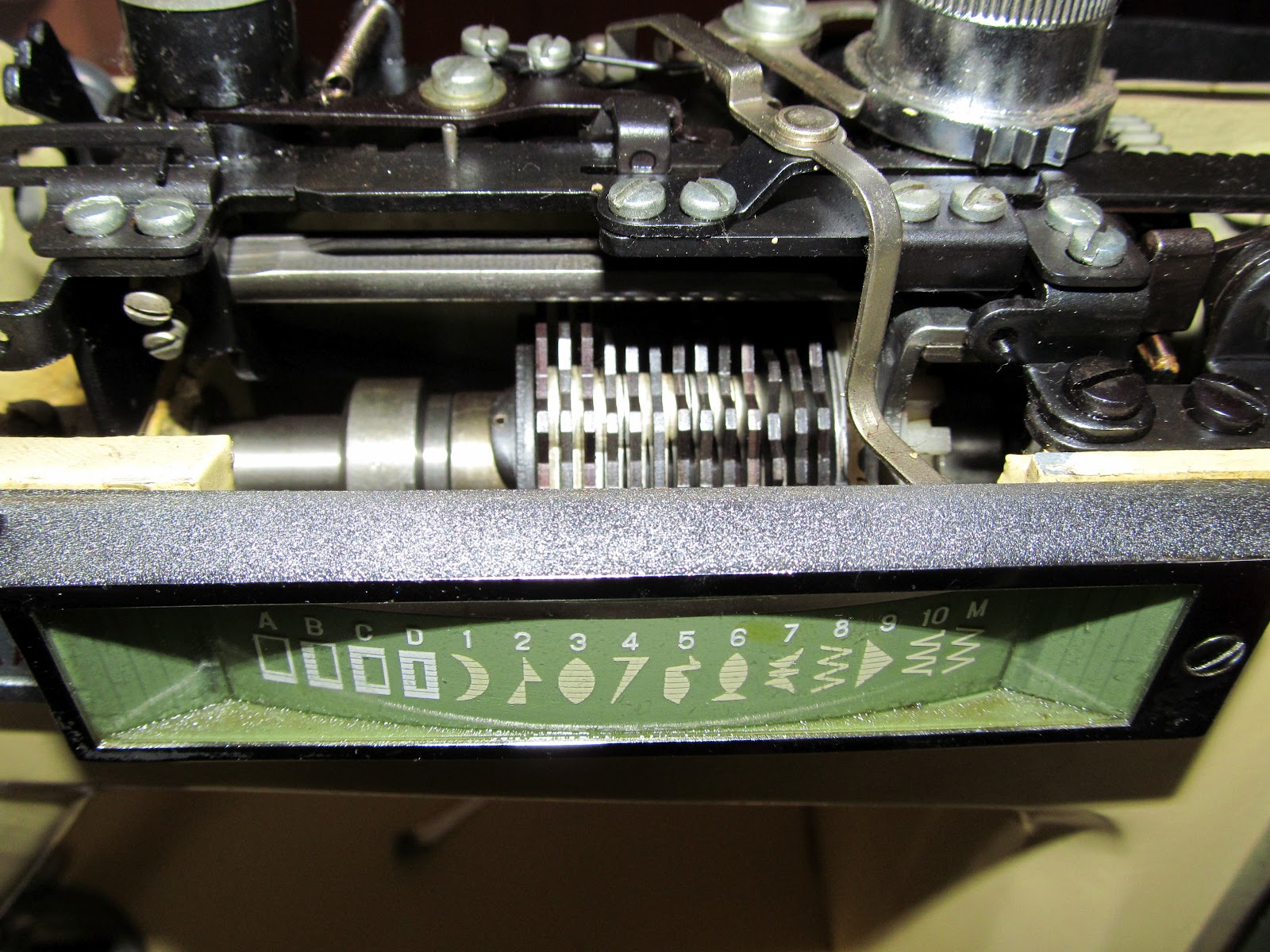
Some of the machine I could salvage for parts later on, I suppose.  This dial in particular has a real steampunkish feel to it.  It might do for my Mystery Project later on.


But as for the rest of the machine, I can't think of anything better to do with it than put it all in a box labelled 'dead brother'.   Wish I could find some inspiration to give the remains of this machine a new kind of life.  I'm not really big into jewellery making... what else could I do with it?

Wednesday, April 25, 2012

Vintage Brother Sewing Machine Galaxie 221A - Taking it all apart to get at the broken cogs.

Decided now that the machine is useless unless these two broken cogs and broken cam can be repaired.  Of course they are the only plastic bits in the whole machine, and burred deep within the guts.  So it's time to take my Vintage Brother apart.

If I can get the bits out, I can either find a machinist who could make a new one out of metal (Hopefully not too expensive) or get some hard plastic, a mask and a lot of effort and make one myself.  


Taking the machine apart isn't that difficult a job.  The thing that takes the time is documenting where everything goes, what order it came out, keeping the screws in the right spots, &c.  If I didn't plan on putting it back together again, I could have this thing in pieces in 20 minutes.


Now this is where I need help.

I need to get this plastic cam off this main horizontal shaft here.  How?


Any advice on how to do this?

Tuesday, April 24, 2012

Vintage Sewing Machine - Brother Galaxie 221A - problem found and cleaning

The first thing to do when you get a used sewing machine is to clean it.  It's a painstaking job but will usually fix most problems.

This is a job I absolutely love.  Given the chance, I will spend hours cleaning lint and dust from each and every tooth of each and every cog.  Be it typewriter, sewing machine, or any mechanical device, I don't care.  There is something about obsessing over detail that puts me in a state of calmness.  I imagine that's what mediation is like.


This Brother Galazie 221A has enough dust and guck in it to keep me happy for a month.  It spent it's life teaching sewing in the schools, but I don't think anyone ever bothered to learn how to oil or clean it.  You know something is odd when the bit you thought was metal turns out to be felt...over and over again.

I found this interesting panel on the underside of the machine.  It looked out of place, so I decided I needed to see what's in there.


Ewe!  Looks just like ear wax, don't it?

Grease.  Someone very thoughtfully provided a whole bunch of it.  What I did was cleaned off the gear and the parts of the grease that where black with bits of metal.  then redistributed the clean grease so that it generously covered everything that could possibly move.


While I'm slowly cleaning everything, I discovered what's wrong with the Zig Zag function.

See this plastic cog?


Broken.  There are two plastic cogs in the machine and both of them are broken.  This is putting the timing out.  Where on earth am I going to find replacement parts?  Who on earth thinks to make such an adorable machine (with goose shaped stitches) and then puts stupid plastic cogs that will wear out quickly?  Shakes head in dismay.


(edit to add: it's actually the hidden plastic cog that is making the zig zag timing off, but the damage is very similar)

The hunt for replacement parts begins!  Not sure if I want to keep cleaning this if I can't find the parts to get it fully functional.


Vintage Sewing Machine - Brother Galaxie 221A - gutsy

I don't normally deal with these modern machines (post 1935), but I couldn't resist this little Brother.  

The Brother Galaxie 221A has a stitch that is in the shape of a goose!  Um, yes!  That's me!  The sewing machine loves me!  It just needs my help to reach it's full potential.

The moment I got it home, I started taking it all apart, only later did I think to get my camera out.  oh well, I'll take a photo of the finished machine at the end once it's all polished up.


This particular machine was owned and used by the school board for many a year.  After they were finished with it, it passed through the hands of a couple of owners.  It looks like the electrics were re-wired within the last ten years.  

A couple of problems with this machine, the worst being the HUGE amount of lint and dust in it.  Second problem was much easier to fix.  The wiring for the light and the motor were switched, so when you plug it in, the motor goes at full speed. 

The final problem is not so easy.  The timing is off.  Basically, when you do a zig-zag stitch, the needle should move from side to side.  The needle should move from side to side at the top of the stitch, but instead, on this machine it moves at the bottom (or just about the bottom).  This is not good.  

Not sure how to fix the timing, thus all these photos of the sewing machine's guts.  Experts, here's your time to shine.


No, I'm not going to take it into the sewing machine repair shop.  Half the fun is learning how to fix it myself and I have enough machines already, I don't really need another one even if it has geese shape stitches.  

As for manuals, I haven't found one yet.  Yarnhog has the best information about this machine anywhere in google-land.  Here is a threading diagram from a sight that will gladly sell you a manual.