Trampled by Geese is a reminder to myself to look at the positive side of life and to endeavour to only write about things that inspire me rather than focus on what is negative in the world. Kirkegaard once wrote, “Being trampled by geese is a slow way of dying, but being eaten to death by envy and greed is even slower and more painful”.
What unexpected yarn has fallen into your life? Do you have a go-to project you love to make with found yarn or do you wait to see what the yarn says it wants to be?
About a year ago, I stumbled on some free yarn, leftovers from the now closed local mill. Talking to people who used to work there, this was part of calibrating the spinning machine, so it contains a lot of different fibres from a variety of farms. Most of them are less than a day's journey away.
So I made a thing. And I made a video about the thing. And the yarn. And deep thoughts about the yarn, fibreshed, and my personal textile history.
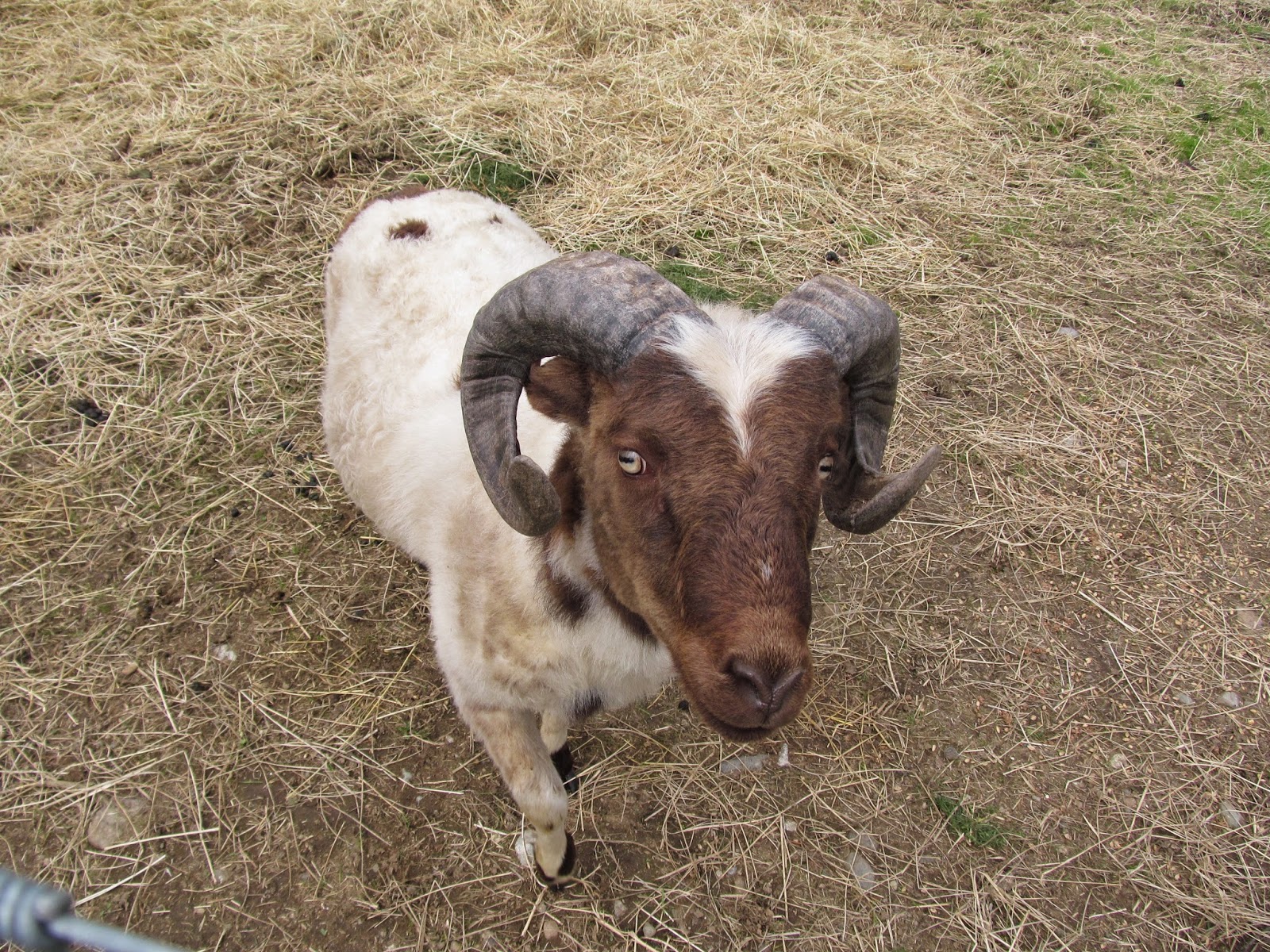
I enjoyed this project. It's the first time I've made something from sheep to clothing that feels like a quality garment. What's more, it's a sheep from my farm! One that I feed every day and who loves cuddles.
In a lot of ways I've gained confidence. I understand better how the yarn behaves in the woven cloth and that I can actually make something from scratch. I also understand why a more historically accurate cloth would involve a lot more people: a shepherd, weaver, spinner, seamstress, etc. It seems almost that I lose as much as I gain doing each step myself.
One of the things I worry about is this sets the bar too high. Both for me and for viewers.
There's no need to do every step ourselves. I did it because I was curious if I could and I'm a cheap little chicken who can't always afford to buy the cloth I want to work with. Even in this project, I combined modern cloth with traditional methods. Add growing, spinning, and weaving the lining to the mix and I would need another year or three to get it done. But even then, I don't think it would have been as good for the cloak as the lining I choose.
It's about learning from history instead of trying to reproduce it. What can I learn from the past and how can I incorporate it in my life today. There's no shame in it. There's no shame if a future project has bought yarn or I go to the shop and buy fabric. And yet, it's a nagging worry that I now need to progress to better and better things, especially on my youtube journey. That's not the path I want to take. I want to make projects that fill me with joy, and sometimes that means buying yarn. Sometimes it means spinning it.
Sometimes there won't be any yarn involved at all.
Most of all, I'm happy with the improvement in my video-making skills. I'm getting better at what to film and what to leave out. My voiceover confidence is improving. I'm still seeking a balance between showing enough for the technically curious and keeping the story moving, but on the whole, I've moved up a notch and am now about 11% of the filmmaker I want to become.
It's yardage now and it is more beautiful than I could have expected. The weaving took longer than I had hoped. I think that's because I rushed through the spinning so quickly that I didn't get as consistent a yarn as I prefer.
I'm a fairly good weaver but I do have my comfort zone and this wasn't in it.
It began as a compost pile and a birthday present.
When I asked what he wanted for his Birthday, he said something like, you know that yarn you have stashed away as a treasure? You know how you promised me a rug? That's what I want.
The yarn has a story. It's spun at the (former) local fibre mill from a mixture of fibre from the farm. Some of the animals like the rich deep black alpaca, are no longer with us. This is sad, but also happy because the rug helps us remember the good times we had.
But it's not just any old fibre, this fibre was destined for the compost heap, to get smothered with squash plants as it slowly transforms into soil. The fibre was too fragile, too dirty, too... whatever to spin into a sensible yarn. But the mill had this machine that could use inferior fibre to twist around a core and make it soft and strong and valuable.
It used to be that once a year I would take an internet vacation. A month without internet, usually in February (because it's a short month). I would try to get my work holiday to match and I would worry away at projects that need finishing or something I want to get started and done.
The last time I did that, I wrote a book.
It's been a few years since I took my internet vacation and it's a bit like cookies on the browser, too much internet and I start to slow down and life clogs up. It's hard to get away and spend time doing real-world things.
This year I can't do a proper internet detox, so I'm doing a longer one. Max 1 hour per day on the internet (but more time for video editing). Trying very hard to get the farm ready for spring, grow extra food in the garden, and film more projects for youtube.
Sheep are very helpful... or enthusiastic.
It means the same thing when you are a sheep.
But this internet vacation means I haven't had much time for blogging lately. It also makes me realize how much I enjoy blogging again. So I'll be back.
Just as soon as I can get a few more things done around the farm.
Laying the flax out to dew ret - for more on that, here's a video:
Winters here are dark. Far darker than you think for our latitude, but with the clouds, rain, and oppressive conifers hemming us in on all sides, we can go weeks needing the lights on in the house at noon.
It's also very hard on the animals. We have lights in the hen house our they forget to wake up and eat. It's always a battle to keep everyone healthy - critters and humans alike.
Basically, winters on the farm are dark. But what makes them bearable is spring and all the new life it brings.
A while back, I put an advert in the local UsedAnywhere seeking bummers. A bummer is a lamb whose mum is unable to feed it, either because the lamb is an orphan or they have too many siblings competing for limited milk supply or other reasons.
Well, I got a reply so I'm off on an adventure to meet some lambs.
It's a day trip and a ferry trip from home. But it's a lot of fun to see what's up in the Cowichan Valley. Enjoy.
I am looking for a young ewe lamb or two to hand raise and join my flock.
I have a small fibre flock and work from home. I love spending time with my sheep. But we aren't lambing this year and I miss having the little bleaters underfoot.
I would like to buy one or two young ewe-lambs, not yet weaned. Preferably a bummer that the mum is unable/unwilling to care for.
I have no specific breed in mind, but I would like it to be a squishy wool good for sweaters and socks (most of my current flock are Cotswolds). A Suffolk or Suffolk X would be lovely for sentimental reasons. Will consider "meat" breeds as they often have lovely fibre - what keeps a meat sheep happy and healthy also makes good wool.
Why am I hitting fluff with sticks? Read on my friends, it's fun.
You know how you read or watch a nifty thing and you think you have the skills to do it. You just never take that final step to trying the new thing. Maybe you aren't confident you will do it right? Maybe you let yourself get stuck on the tiniest detail (how long should my whippy willow rods be - I need specific numbers people! How many inches? No one will tell me, never mind, I now have a good excuse to return to my comfort zone.)
My friend Brenda took away my excuse not to try this nifty thing. During the Virtual Sheep to Shawl, she set up a willowing station. It was so much fun, why wait so long to try this?
So I did what I do, and I took my new skill home and pushed it to the limits to find out what it can and cannot accomplish. While exploring this skill, I discovered that there aren't many resources for it on the internet, so I made a video.
The problem is, it's not the kind of video easily done within my comfort zone.
My preference is to have as little as me as possible in the film, be it visual or voice. I'm not that interesting, why would anyone want to waste their time listening to me... or so the voices in my head tell me.
But this is more limiting than liberating. I have a list (currently 5 pages long) of videos I want to make for you, but I don't want to make half-ass videos. Each video I make, I want it to build my skills and to provide something useful to the world. I have a lot to say on many topics and doing it silently wouldn't do it justice.
I'm not sure if I'm saying this clearly.
But learning the skills I need to make better videos is like flogging myself with whippy willow rods.
This video passes a huge milestone in my journey. I cannot say how much courage it took, because I suspect for most people, this act would take no courage at all.
Put simply, I do a lot of talking. A voiceover for the whole video describing with a touch of storytelling in hopes of making a technical tutorial interesting.
Emotionally and physically this is exhausting. But I did it. I published it. No one yet has noticed (or at least mentioned) the mistakes I made with my speech impediment (mid-Atlantic accent mishmash that let a few regional flaws slip through)
These videos take longer to make, so I'll probably be alternating between longer with talking and shorter something silly videos for a while. At least until I get into my grove.
But it's a lot like willowing - a lot of fun and I don't know what took me so long to try it.
If you like this sort of thing and want to see more of it, here are some things you can do to support me on my creative journey.
I'm desperately trying to wash the rest of the wool before the rainy season sets in. Even on hot summer days, it takes two days to dry the wool enough for long term (air/bug tight) storage. In the winter (aka, rainy season)... well, it's a challenge.
The other challenge is in the warm weather, the animals get first priority with the well water. So there aren't many days when I can wash the wool.
Washing in the garden helps, because then the dirty water not only waters the plants but it adds a lot of benefit to the garden.
So why do I use Orvas Paste?
Orvas paste is pretty much pure SLS (sodium lauryl sulfate) which is extremely unpopular in cosmetics and soaps these days. SLS makes a lot of suds and is often added to shampoo or detergent to make it look like it is working. We are trained that bubbles do the cleaning (this is not true, but it is believed).
A lot of people have skin sensitivities to modern detergents and soaps. Quite often SLS gets blamed for this. So they buy things that are SLS-free. Their skin gets better.
Sometimes SLS is the cause. But more often, I suspect the problem is poor quality control of the ingredients. If a company takes the effort to remove the most common additive, then it is probably paying a lot more attention to the ingredients that do go into the product.
I think this for two reasons. One, quite often I am washing wool with someone and I stick my hand in the Orvas Paste and they stick their hands in it either. Then they comment, oh wow, this is awesome stuff, I normally get a rash. Then they panic from it being SLS. But still no rash.
The other reason is my own skin is hypersensitive to just about every soap. Even real soap made from lye and oils can cause massive blisters. Orvas paste is one of the very few things I can use without hurting my skin.
Orvas paste is often used to wash babby animals, like lambs and goats.
It's also quickly biodegradable so it's safe to use on the garden without having to dilute the wash water first. Most other washing substances I've tried, kill the plants - always test on a section of lawn before using in the garden.
Most of all, I love how quickly it rinses out of the fibre. All the other detergents and soaps I've tried, take a lot of rinses to get the residue off.
But if it causes a reaction to your skin, then don't use it. Test a small area of skin first.
Also, different cleaners react differently with different minerals in the water supplies, so always do a small batch to test.
Orvas paste:
doesn't hurt my skin
doesn't kill my plants
biodegradable
mild insecticide in the garden
need very little (1-4 Tablespoons per fleece) - it actually works better with less
extremely affordable $40 for enough to wash a hundred+ fleeces
great on protein stains (like poo, urine, and blood)
It's not the thing for everyone. But it works for me.
If you like this sort of thing and want to see more of it, here are some things you can do to support me on my creative journey.
11 sheep got a haircut today. Got 6 nice lambs fleece, first shearing, and one nice adult fleece - all lovely for handspinning. The rest were too tippy or short so I put them to one side for felt making.
To start with we made a pen with pallets and binder twine. The trick with this sort of pen, and hurdles in general, is to stagger them in a zig zag style for strength and support.
Larry certainly has grown this last year.
I remember when he was cute little fluff ball that followed us everywhere.
After wrestling sheep in the mud, I got a bit thirsty. So, in my same sheep wrangling cloths, I went to my local brewery to fill up my growlers. Growlers are basically two ltr jugs that we take to the beer making place and they fill them up with fresh beer. In my opinion, growlers are a good thing.
I like this brewery. It's new and getting quite famous, so there are usually some tourists or townies hanging about. But the bread and butter business seems to come from people in fluorescent safety gear or overalls. The brewer(s) make beer on site, in locally made vats, while employing local people. The beer is brewed in small batches and it is darn fine stuff.
There was a fella there, and somehow we started talking about clothing lines produced in North America, and how few there are these days. Bla bla bla, environmental impact, labour issues, stuff like this. I made my usual comment about how awareness of local issues like food have made people receptive, maybe it's time that there were more locally made clothing from local materials.
He replied along the lines that yes, it's important and yes it would be a good thing, however, making a big deal of the local issue is too gimmicky. It's better to make a quality product and focus on that. If that means using local materials and employing local people, then people who care about it will seek it out.
It was quite a powerful thought for me. Being thirsty, I immediately connected it to the fresh beer that was filling my growlers while we talked. Why did I choose this brewery? There must be over a dozen within easy drive of my home, most of them fill jugs. I passed at least 10 other sources of locally made alcohol in the 5 minutes it took me to get to the brewery. Why do I buy my beer here? The atmosphere, sure. The localness, also important. But it's the taste more than anything. The quality of the beverage brings me back.
So maybe it is a good time to start producing locally made clothing from local materials - but not solely as an act of rebellion against globalization (or whatever we are ranting again these days) but as a source of quality, long lasting, everyday wear. Something that is dearly missing in our world.
These are my three new girls (from back to front) A-marry, A-minnie, and Annie
They are such a delight. Very curious about everything. The two at the back are pure breed Black Welsh Mountain, a heritage breed.
The Black Welsh Mountain sheep is one of those old breeds that is
dying out. There is thought to be less than 2,000 in North America
and only about 10,000 left in the world. To put this in
perspective, it is estimated that there are 30,000 sheep on
Vancouver Island alone - that's three times the world population of
Black Welsh Mountain sheep. I feel privileged to help preserve this
friendly and playful breed.
The snow is suppose to let up this afternoon and transform into a cleansing rain. It is entirely possible that I won't have to shovel my driveway tomorrow morning. Still have to get the snow shovels out today, though, with an extra couple of inches of snow overnight.
If the driveway is clear, I plan to spend most of tomorrow down town at Knotty by Nature. It's their second anniversary celebration.
Here's what Stephanie has to say about it:
Buy Nothing Day-ngerous, Friday November 26th! And….2nd anniversary celebration for Knotty by Nature!
Shop smart: challenge yourself to buy nothing that is harmful for the planet. Car pool, take the bus or ride your bike. Bring your coffee cup to you local coffee shop. Or bring your own bag to your favorite local yarn store. Bring your own yarn or maybe buy a that skein you’ve been wanting and knit for the day atKnotty by Nature.
The natural, sustainable and environmental qualities of wool were recognized last month by even His Royal Highness. The English have been quite innovative lately developing techniques to expand the uses of wool in order to try and save their local wool industry, which at risk of encroachment from petroleum based fibres like “polar fleece.”
If your interest is piqued, the latest Selvedge , Issue 36, has an in-depth and thought provoking article on HRH Campaign for wool an all the things Brits are doing with wool. We have a copy at the shop and you can read it anytime, or come and read it at the “Buy Nothing day(ngerous) Knit-In”, Friday November 26th!
Come join us for a day of woolen activities!
And
More details for our 2nd anniversary day! Friday November 26th! Fund raising in the community of fibre artists. _______________________________________________________________________________
Who should come: everyone, even if you have never tried spinning, carding, weaving….
People who are curious but are shy to participate
(bring your knitting/spinning and hang out, etc...)
Knitters, weavers, spinners, felters....
Free projects to participate in:
1. Sheep to shawl - Carding, spinning and weaving a shawl.
The resulting shawl will be raffled off on
Distaff day, January 7th. Proceeds will go to the Madrona Farm.
2. Wet felt a bike - we are growing our bike family!
Cost: Free
Please bring your own mug, if possible, and if you feel like bringing a tasty treat to share, I am sure it would be appreciated by everyone!
This is cross posted from my Lyme blog. Since it's fibre related and has a positive tone to it, I thought that maybe you guys would like to read it as well.
Knitting, spinning, weaving and crafting in general has done so much good for me over the years. Especially since I became really ill, it has provided me with nourishment that no medicine or food ever could.
Being a member of the yarn related community, both local and online, provided me a link to steadfast friends and wonderful support.
Yarn encourages me to accomplish something in my day. I'm not just wasting time waiting to get better, I am making socks, or a skirt, or something else. I create something tangible - and I know that's nothing to most of you who can do that any day, but to me, that's a huge accomplishment! It means the world to me to be able to pull on a warm sweater that I knit myself, or to adorn myself with vibrant socks that I not only knit myself, but I spun the yarn. It fills me with a sense of love and self worth that otherwise leeches out of someone with a long lasting illness.
But it's more than that.
When I am so ill, I'm nothing but a useless waste of space, I can still create something. I can knit a few stitches, or pull myself out of bed to lay on the couch and spin yarn. Even if my arthritis is so bad that I can only manage sparse five knitted stitches, it is still a contribution. It's marks the difference between being a worthless waste of skin to being human.
I wish I could explain it better.
Lately I've been spinning some yarns for sale. I want to make a bit of money so I can afford Christmas. One particular yarn, is rather challenging. It is involves making two yarns at once and plying them together simultaneously. I feel like an overtaxed octopus trying to do all this at once, but the results are gorgeous. And, it gave me an idea.
Now, this is just an idea at the moment. As I said yesterday, I'm not an organizer of big things. I realize that of myself. Give me grunt work, and a task I can do in the background, and I'm happy!
The idea:
It began by thinking that making yarn and other crafts to sell is one of the few things I can do to make my own income. I don't make very much - just enough to buy more supplies for my hobbies - but even that little bit says to me that I can one day become a functioning member of society again.
This got me thinking about how much better things will be when Lyme is understood. When the political controversy no longer governs treatment and an accurate diagnosis method is available. Organizations like CanLyme are working towards this, and wouldn't it be great if I could donate money to help them help people like me?
So I imagined myself spinning a special series of yarns, all different kinds and colours, all with at least a fleck of Lime Green in them to symbolize Lyme. And I take this yarn and put a little write up about Lyme in Canada and how lack of research is causing harm...stuff like that. I sell the yarn, and take a good percent of the profits and give to CanLyme (or the like) and a percent to pay for my health care. (note: most Lyme patients in Canada have to pay for their own medical expenses!)
That could be a nifty idea and a great project for 2011. It would help raise Lyme awareness, help support my health care costs, help raise money for charity, and most importantly, make me feel like I'm doing something to both help my state in the world and help the greater cause.
I think I might do this. I know I can usually get fleeces for free, and I don't mind washing and preparing the fibre for spinning. Dyeing the fibre might be an expense and it's beyond my skill set, but perhaps someone might volunteer their time and facilities? If I want a long wool like Cotswold, Romney or a Leicester, I might have to pay for that. But all in all, it's a low cost investment as all it would take is my time (something I have plenty of) and my energy (a resource that waxes and wanes) .
The more I think about it, the more I feel it's a good idea.
But, what if...
What if it went a step further?
What if several people with Lyme did something similar, all organized under one umbrella? Not just spinning, but knitting and weaving as well? Then we did as above? Sell the yarn, give a percent to a Lyme related charity and a percent towards our own treatment. Could this work? Could, given our illness, we do this? Would a project like this not only raise awareness of Lyme in Canada but also give those victims this this vicious pathogen a sense of purpose and a way to feel empowered?
It's not just the people with the illness who feel hopeless, their family, firends and support network also need a way to help. This might be the kind of thing.
I see problems with this greater idea: One thing that comes to mind is that I'm not a leader of men, woman or children. If we did this, I would need someone to take the lead, but I would still want to be consulted in it's organization and implementation. Not to mention, the leader of this movement would have to have a non-Lyme brain. There are other problems I see already, mostly where money is concerned. And who would do the write up about Lyme awareness and the project? How would it be presented to the public? Free knitting, weaving and spinning lessons would be needed for those who do not yet know how to do these things. Plus equipment: spinning and knitting are affordable, but weaving certainly isn't.
I didn't get my sock yarn finished yesterday as planed. But that's okay. Here is a photo of the roving, the singles on the bobbin waiting to be plied, and the finished sock yarn, Navajo plied.
I'm actually looking forward to the end of the Tour de Fleece. It has really taken a lot out of me this year. What with getting up early (the tour started at 3:30am local time yesterday) to watch the tour and staying up late with insomnia. I've never gotten this far in the Tour and I have enjoyed it. I've met lots of fibre friends on Ravelry. But I'm ready for it to end now.
To be completely honest dedicating this much time to one craft leaves the other projects feeling left out. My knitting - a sweater, two pairs of socks and another set of socks, these ones knee high - are crying in the corner, my tatting throws a tantrum whenever I so much as look at it, and my weaving sits in the middle of the living room getting in everyone's' way.
There are only two days left until the end. It's been a fantastic adventure and I am very glad to participate.
My main challenge for the Tour de Fleece, my impossible challenge, is to wash, comb and spin a Shetland fleece.
I admit, I've never completed a Tour de Fleece before. The first year, my wheel and I got into an argument with a car door. Typical for a yarn sport that is based on cycling, don't you think? The second year, I don't really remember. I think heat, illness, and exhaustion got to me. I just sort of petered out.
This year, touch wood, I'm doing better than ever before.
I completed my secondary goal of spinning tatting thread, which will head off into the mail today, and I'm almost finished my primary goal which is, the Shetland.
In the photo, clockwise from left top: Combed top, washed locks, spun wool singles at around 36-40wip. Take a good look at those locks, there's about half a dozen there. More importantly, that's all I have left to comb. I have a small box full of little birds nests (top) still to spin, and a great deal more yarn on the wheel. But the end is in sight, and early too. The Tour goes until July 25th, that's ten days from now.
In my defence, a great deal of the fleece is unmanageable. About 1/3rd of the fleece was felted on the sheep, sun damaged, or overloaded with vegi-matter. I lost another 2/3rds of the weight of the fleece to the combs - I am being perfectionist here and it really isn't an easy fleece to work with.
But all in all, I am ecstatic with my progress.
So, if I do in fact finish my main goal, I will still spin every day the Tour rides, but I won't pressure myself. I'll just coast to the finish.
The Tour de France begins tomorrow at around 8am local time (or so the TV says) and that is the time I start spinning.
The challenge is to spin every day the Tour de France rides, which is most of the month of June. On top of that we set personal challenges for ourselves. I hope to spin an entire Shetland fleece during the tour. The plan is to spin it as a true worsted (which involves hand combing the fibre as part of the prep) singles which will one day be used for weaving. Perhaps even as warp.
Singles for warp?!? Gasp.
On top of that, I have recently agreed to spin some silk thread for tatting. Note, that's thread, not yarn. I just need to do two or three hundred yards of the stuff, but it is three ply. I am wondering if I can get away with Navajo plying it. That would make my life so much easier. This needs to be accomplished in the next week or less, so let's add that to my Tour de France challenge.
Since we can join more than one team, I joined Team Sprinters, Team Climbers, and Team Hopelessly Over Committed. I've also joined Team Raw Power which is a team where the participants process and spin at least one pound of raw fibre for the tour. I have 4.5 lb. and that's not including the parts of the fleece I don't want.
I suspect I won't win any of the prizes as I am not spinning any of the vibrant coloured fibres that photograph so well. But that's not why I'm doing this. I'm spinning because I have so much fibre insulating the house that I really need to get my fleece stash under control. This is great motivation.
So, on the eve of the Tour de Fleece, I wish good luck to all you spinners out there who are participating. And good luck to the riders on the Tour de France.