People don't take things apart enough any more - Though it is for good reasons, I suppose. I think society trains us to be afraid of the innards of things. Taking apart a something to see how it works might void the warranty, or worse, expose us to some of those highly dangerous chemicals that they use to make electronics these days.
It seems to be a generational thing as I hear stories of how so and so took apart their dad's radio or bicycle and put it back together again, and even though it worked, they had all these spare parts left over. At which point in the telling of the story, everyone chuckles.
This sort of activity use to be a right of passage - but now a days you would be foolish to take a part a radio without specialized equipment and a hazmat suit. We have gone a bit beyond the word of vacuum tubes.
And I think that's a real shame. We are one step further away from being self reliant. Instead of having the time and skills, not to mention the hazmat suit, needed to make simple repairs, we spend more time working so we can spend more money buying new things to replace the slightly broken things in our life.
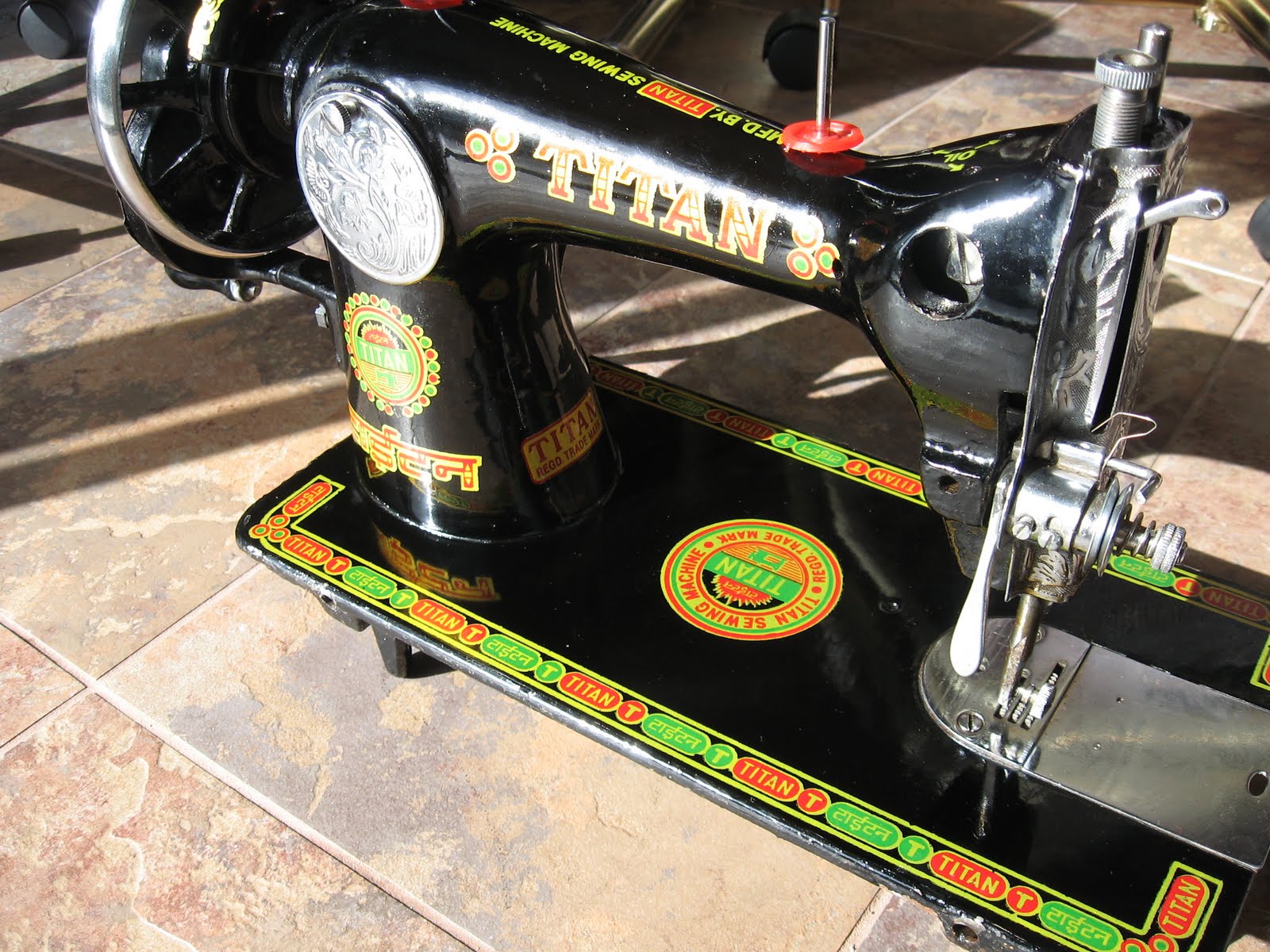
The chickens bought me a sewing machine for my birthday. Very nice of them too.
It's from India, and despite appearances, is very new to this world. Only about 5 to 10 years old, maybe less. Although, it does look like an antique sewing machine and it even has a hand crank to make it operate. So it has the same technology as the vintage sewing machines. It also has only one plastic part: the crank handle. Unlike modern machines it has no electrics, no electronics, and no plastic bits inside to wear out.
I wonder if it will still sew 94 years from now (the current age of my treadle powered Singer 127, Beautiful Sphinx). It's not as well made as the antique sewing machines, but it is perhaps, better made than many modern machines. It is also much easier to repair.
The machine is made in the style of a
Class 15 clone. Which is good news for me because
this manual (pdf) covers most of what I need to know to make it work such as threading diagrams.
When I brought her home, she didn't work. This is where the taking things apart comes in. At first, I was very nervous. I obsessively took photos of every stage so that I would know how to put it all back together again.
I could manage a slight wiggle from the machine, but that was it. Even with the clutch engaged, the main wheel kept going without moving anything. I couldn’t see any lint (anywhere - which made me wonder if it had actually been used) or any obvious jams. It did have a heavy grease or motor oil on all the parts that should move. It had hardened to a horrible wax like substance which I suspect did more harm than good.
So I took it apart the wheel to see if the clutch was working. Aside from more wax/grease, it seemed to be fine. I couldn’t turn the shaft, so I decided to put it back together and try something else.

Next, I spray WD40 on all the gucked up parts. Don’t worry, I rinsed it out with sewing machine oil afterwards. Still no luck getting it to move, but now there is the sound of metal on metal. Hmm…
I followed my ears, and found that it was coming from the bobbin area.
Realizing I should have started here, I took it all apart…


… and found the problem.

Such a small bit of thread and yet it prevented the machine from working. I suppose this means that the machine must have been used at some point in the past.
I reassembled everything, oiled with sewing machine oil, and ran the machine. Listening for anywhere it is running rough, applied more oil, ran the machine some more.
Now it runs very smoothly. I just have to make some thread guides (the only parts missing) before I can try sewing on it. I won't know 100% if it works until then, but fingers crossed.

My favourite things about this machine are the decorations (is that Hindi?), the fact that it has metal parts instead of plastic ones, that some parts like the face plates are hand fashioned, possibly out of reclaimed materials and that the brand Titan is also stamped on the parts inside which means that it is not just something they painted on the outside. I also like that it's a hand crank machine that was built not for decoration, but for use; for modern day use to boot.
Less happy with the fact that I don't think it's as well built as my antique and vintage machines. But it is built to last longer and be easier to repair than fancy modern day machines made for the American market. I also don't like that the paint is chipping in a few places. I'm also not fond of how heavy this beast is. It's portable in so far as you don't have to have a treadle base and table with it. It is not something I want to carry around with me on a long walk.
I think this will be a good machine for sewing in unusual places. If it works, I plan to use it at an upcoming workshop where I need to bring my own sewing machine.