Saturday, May 21, 2022

Could Craft With Me become a thing? I think so.

 My attention span isn't always what I would like.  I admit, I find it difficult to stick to one task for long enough to get anything done.  So I look around for tricks to hack my brain into getting stuff done.

One of those tricks is watching youtube videos in the background.  It's a lot like when I used to watch TV, I knew the show was a set amount of time, and used that to guide my action.  I would work until the show was over and it really helped to have the background noise to distract the part of my brain that want's to get up and do something else.  Music helps too.

This last few years, I've been using Study With Me and LoFi Girl videos to help my crafting.  But to be honest, studying isn't a good friend for crafting.  It's so serious, the music is designed to cause deep focus and my crafting is more light brain work and repetitive tasks.  I'm not engaging the same part of the brain.


I really needed something more craft specific.  Preferably something with yarn, good music, and no talking.   

But alas, the internet seems to be lacking in this.


So I made a thing.


I really enjoyed making this!  

I want to make more.

I worry it's going to flop pretty badly by youtube standards.  There's very little out there like this and even if I'm not the only one who needs something like this in their life to help make things, people don't know to search for it because it's too new.

Maybe I can make one a month, if I can stick to a schedule that much, if only to use up the extra footage that didn't make it into my main videos.  

And maybe it will become a thing.  I hope so.  I imagine having a whole bunch of people making Craft With Me videos about many different crafts, so I can choose today I want to spin yarn, so I watch a spin with me video.  Tomorrow maybe I'm in the mood for a woodworking with me video.  I don't know.  

If you think it's a good idea, please share with your friends who need a little motivation to get crafty. 

Saturday, May 07, 2022

Knit a sweater in a day, they said! It would be easy, they said! yeh right.

 I think the title says it all really.  

This wonderful machine fell in my lap and in my hubris I thought I knew plenty of knitting and this would be easier than the two pointy sticks.

yah right.


At the end of the sweater, I am overwhelmed by how much love and respect I now have for machine knitting and machine knitters.

It really is true that it doesn't matter what tools we use.  It's what the knitter brings to the yarn that makes all the difference.  

I can't wait to find out how to use my ribber.  Any ideas?  There don't seem to be many tutorials on this that I can find.


(oh, and there is dyeing and sheep in there too because, well, sheep)

Saturday, April 30, 2022

Some thoughts on weavers - and why we can sometimes seem cold to the uninitiated

Pilfered from my other blog.   


Can I borrow your toothbrush?

Not A toothbrush. YOUR toothbrush.  

The one you use at least twice a day (and hopefully more). I’ll bring it back tonight, or at least by next week... or soon...ish. Soon-ish. I promise. I know it’s your only toothbrush and you don’t have a chance to go out and get another one because it was a super-deluxe toothbrush you spent years of your life finding the perfect one to fit the shape of your mouth. You don’t mind if I borrow it, right?


It may seem like an unusual request and an even odder analogy to weaving. As a new weaver, I had trouble understanding that silence that invaded the room every time someone asked to borrow (or even touch) a weaving tool. Nearly 20 years later, I’m starting to understand what that bated-breath moment was and why weavers can seem incredibly cold on the idea. And yet...


​Weavers are some of the most generous and helpful people in the fibre arts community - and given how amazing all yarn people are, that’s saying something! Weavers are happy to give their time and spend hours troubleshooting in return for nothing more than a cuppa tea. My guild is filled with hundreds of kind-hearted individuals who will drop everything to help a fellow guildmate.  


Why then, does the thought of lending tools or sharing studio space send so many weavers running for the hills?


If weaving was a personality, it would be ISTP on the Myers Briggs scale. Introverted, Sensing, Thinking, Perceiving = The Craftsman (or for most of my guild, Craftswoman!). If I was choosing labels, I would call this personality The Artizan. More than a craftsperson, a person with tremendous dedication to improving their skill and attention to detail that doesn’t borderline on the obsessed - it has a fast-pass to that border and spends every second week on the far side of it.  


Introverted:  Weaving is a solitary craft. Yes, we gather together to share and learn, but then we go home, to our studio, alone. Our looms are generally too big to lug to weave-ins. Spinning, knitting, crochet, and most other fibre arts don’t have this demand for solitary time to be able to accomplish the most simple aspects of their craft. I came from a knitting and spinning background, where weekly meetups for tea, yarn, and society, were standard. It took me a long time to understand why weavers are such isolated animals.


And let’s face it, there’s the counting! I mean, counting to four is hard enough, but some of these drafts require us to count to 10, 20, or over 810 for one pattern repeat. This does not make for a kind reaction to destruction. One error can cause hours of frustration. If we are alone, the only person we can get frustrated at is ourself and life is safer that way. 


Sensing: in this instance, sensing is all about noticing the details. I suspect every fibre artist is strong in this area. We absorb the world around us through our senses - all of them - and remember the details. It’s one of the reasons why textures and smells are so important to us when buying yarn.  


The texture, shape, feel, smell, and occasionally taste (I only have two hands, two feet, and sometimes I need to hold things in my mouth) is important to us.


Weavers generally take this focus to the extreme. Forest - trees. A weaver has to see both in excruciating detail. Each thread needs to be measured to the centimetre (or better yet, the 1/16th of an inch). We need to be intimately equated with how much pressure and friction we can apply to a warp thread - as an individual and as a group. Not to mention, the precise tolerances of our tools. This precision was never needed in knitting - where the biggest problem I had was whether the yarn would make the cables pop or if it would pill if knit into a sweater.  


Thinking: The thinking personalty analyzes the pros and cons, and seeks consistency and logic in decision making. Weaving is all about consistency. There are so many right ways to do a weaving technique, but the only real wrong way to do it is to be inconsistent. Weaving naturally attracts people who adore consistency. I suspect from an outside point of view, moving the weaving bench two inches to the left isn’t going to be a big deal. But to a weaver, that is a massive deal as it will change the shape of the cloth. Inconsistency in the placement of the tools means the weaver will change their behaviour to accommodate, which changes the finished fabric.


The cloth reflects the moment. This is known in every historical weaving tradition, from the Cowichan people on the West Coast of Canada to the Irish Linen weavers who wove in dark, stone cottages. SAORI weaving technique embraces this understanding that cloth is like a river. Capture that moment and flow in time, and it can never be repeated. Be it our mood, the humidity, the pinched nerve while sneezing, the placement of the tools - weaving is capturing and trapping the moment as the weft is locked into the warp.


But for most weavers, we strive against this. We seek consistency in our work. We often struggle to keep out the influences of the moment and the person, and this too is part of the Thinking element of this personality type.


Perceiving: The balance to perceiving on the Myers Briggs scale, is ‘judging’. And I wonder how to say this without defaulting to the “not a cat” definition of dog. These are both about how we analyze information. Judging likes to put the information in boxes that gives the information value. This was a good thing, that was a good meal, this crosswalk isn’t pedestrian-friendly.

Perceivers are less about organizing where the information belongs and more about accepting it. A thing happened. I ate a meal. Oh, that car almost hit me, I will be more careful in that crosswalk in future. Often the two styles of processing information assume the other style is the same as them. Conflict happens when Judging style assumes the perceiving style assigns moral meaning to each item. The perceivers can’t imagine that anyone would, or even could, file information into groups like that.  


Most weavers I know prefer to take in information rather than spend time sorting it into categories. If something happens, no one has to be to blame. We simply look at the situation and see if there is something we can try to prevent it in the future. If the shuttle drops. That’s what happened. The solution is to try different throwing, or bobbin winding, or beaming techniques until we find the way that works. There is too much to do to waste time categorizing events into judgement boxes.


Interesting. But what’s this got to do with toothbrushes?

You remember the toothbrush? I’m honoured. And surprised anyone made it this far.  


Introverted, Sensing, Thinking, Perceiving

As an introverted craft, we are used to working alone. Without help.  


Actually, between you and me, most “help” isn’t. It’s not that it’s unwanted, it’s that it usually comes without asking. People assume they are helping, and they don’t stop to ask first.  


But if someone was willing to ask first, that would be helpful. The SCA (Society for Creative Anachronism) taught me one important thing above all else - Always be willing to offer help, and Always be able to accept no as an answer. Once you get weaving a while and get to know the community, it’s evident that there is no moral value or judgement assigned to the word “no”). They just didn’t need help at that moment in time. But they might later.  


Weavers tools, and by extension the placement of them in the studio, are acquired and perfected over decades. Each tool is chosen because it is a perfect match for the weaver, and for many weavers, that means using irreplaceable antique (more than 100 years old) tools. As the weaver uses the tool, it adapts to their body - like a gold fountain pen nib adapts to the writer - and can be majorly messed up when used by someone with a different slant.  


Each tool has associated with memories. This loom belonged to so-and-so who wove the most amazing such-and-such and died at the ripe age of 96. This warping mill was made by this famous maker, and the repairs were done by... I got that shuttle from the fibre festival where so-and-so had a heart attack and was saved by ... These scissors are the only heirloom I have from Strawberry Grandma, my great grandmother, and was given to her as a graduation gift, by her aunt who bought them in Portugal in the 1880s. They are the best darn scissors I’ve ever had, and I don’t want them messed up by cutting paper as they are a pain in the ass to sharpen.


Each tool has many hours invested in choosing, repairing, and maintaining. Each and every tool in a studio is an extension of the weaver’s true self. To borrow a toothbrush is nothing compared to borrowing a weaving tool.  


Lending a toothbrush may mean nothing more than having someone use it for a photograph. Or they may brush their teeth with it. They may, out of kindness, clean it under boiling water, melting the bristles. Or they may just use it to clean the toilet. To lend a toothbrush not knowing what will happen to it while absent, nor how long it will stay away, would be folly.  


But that’s a rubbish analogy. Weaving tools are nothing like a toothbrush. They are far more sacred.  


As a new weaver, it took me a while to learn that lending tools was an issue. So many weavers have more than one of a thing just so they can lend out their extra for people just getting started. But many weavers don’t have the space. Their basement isn’t brimming over with spare weaving tools. They streamline and keep just enough space and tools to fulfil their personal weaving needs. These people are more cautious about lending tools. They tend to set little tests with small things before they are willing to let go of the big things.  

What worked for me was to listen to the weaver and repeat back what I understood so that my mentor could understand that I absorbed the information. More importantly, that I was willing to treat their tool as they wanted, not the way I thought it should be treated. Small tests would be made to see how good I was at respecting the weaver and their idiosyncracies. Sometimes I passed, and sometimes I didn’t. The worst times were when I tried to be helpful by repairing something - that wasn’t actually broken! 

Saturday, April 16, 2022

Bunny Substitutes - featuring Angora

13 years ago, I met one of you in a yarn shop.  It was good.  There was fibre and friend.  A delightful combination.  Like silk, angora, and merino


With that fibre, I wove my first, 100% handmade cloth (both spun and woven by me).  It was a significant moment in my life - empowering.  


This scarf started me on a path that I'm still travelling today.


Which brings us to today's video.  Another landmark on this journey.  An attempt to capture some of those feelings from that first scarf and weave them into today's life.  


Not only is it a pivot from tutorials to storytelling, but it's also my first collaboration.  A few youtube coconspirators and I decided to make videos about angora fibre in honour of Easter and Spring!  The videos will show up here as they are published.  I encourage you to check them out - there is some great info about angora from knitters, spinners, and other yarncrafters.  

Alas, the only bunnies on the farm are wild and don't hang out much with the humans this time of year, I had to make do with Bunny Substitutes.  I hope you enjoy.  


Sunday, April 10, 2022

April showers. No wait, that's not rain.

Photo taken at dawn.


Poor plum blossoms.  

It's not looking like a good fruit harvest this year.

Saturday, April 02, 2022

Giving yourself the Gift of Time

This is something I wrote a long time ago to help someone going through a tough customer service situation.

It's not relevant to me right now, but I stumbled on it and wanted to put it somewhere I could find it if when I need it.


What do you do to give yourself the gift of time?

You know that situation. A message comes from a customer or friend or official or someone being wrong on the internet, or...? They are more frustrated than you would like. It gets you flustered in return. You want to hammer out a reply about all the ways you are right and they are wrong and... but you know that won't help. Answering in the heat of the moment only escalates the problem.

What is the thing you do for yourself to create distance from that frustration?

For me, I hammer out the reply, then save it. Not send. Save. Then I put the kettle on.

While the kettle is heating up, I allow myself to brood about the problem. If it is a big problem, I fill the kettle all the way so I have ample brooding time. But the moment the water boils and I pour the tea, I force myself to think and do unrelated things - usually crafting.

Sometimes one cuppa tea is enough. Sometimes I need several. Some problems need sleeping on and I put them aside until the next morning with a quick note to the customer about how I hear their problem and am looking into it. I will get back to them in 24 hours.

Quite often, that reply I wrote in the heat of the moment gets binned. It was not helpful. After tea, I can write something actually useful towards claiming and fixing the situation.

Giving myself, and my customer/friend/official/internet idiot, the gift of time has been one of the most helpful tools in defusing difficult situations.

What's your go-to solution for getting distance from a tricky situation?

Saturday, March 26, 2022

New friends from the Cowichan valley - or how much yarn can I spin on a road trip?

Winters here are dark.  Far darker than you think for our latitude, but with the clouds, rain, and oppressive conifers hemming us in on all sides, we can go weeks needing the lights on in the house at noon.  

It's also very hard on the animals.  We have lights in the hen house our they forget to wake up and eat.  It's always a battle to keep everyone healthy - critters and humans alike.

Basically, winters on the farm are dark.  But what makes them bearable is spring and all the new life it brings.

A while back, I put an advert in the local UsedAnywhere seeking bummers.  A bummer is a lamb whose mum is unable to feed it, either because the lamb is an orphan or they have too many siblings competing for limited milk supply or other reasons.  

Well, I got a reply so I'm off on an adventure to meet some lambs.


It's a day trip and a ferry trip from home.  But it's a lot of fun to see what's up in the Cowichan Valley.  Enjoy.  


Tuesday, March 22, 2022

Piecing fabric - my upcycling sewing project

Previously published in my crowing hen blog


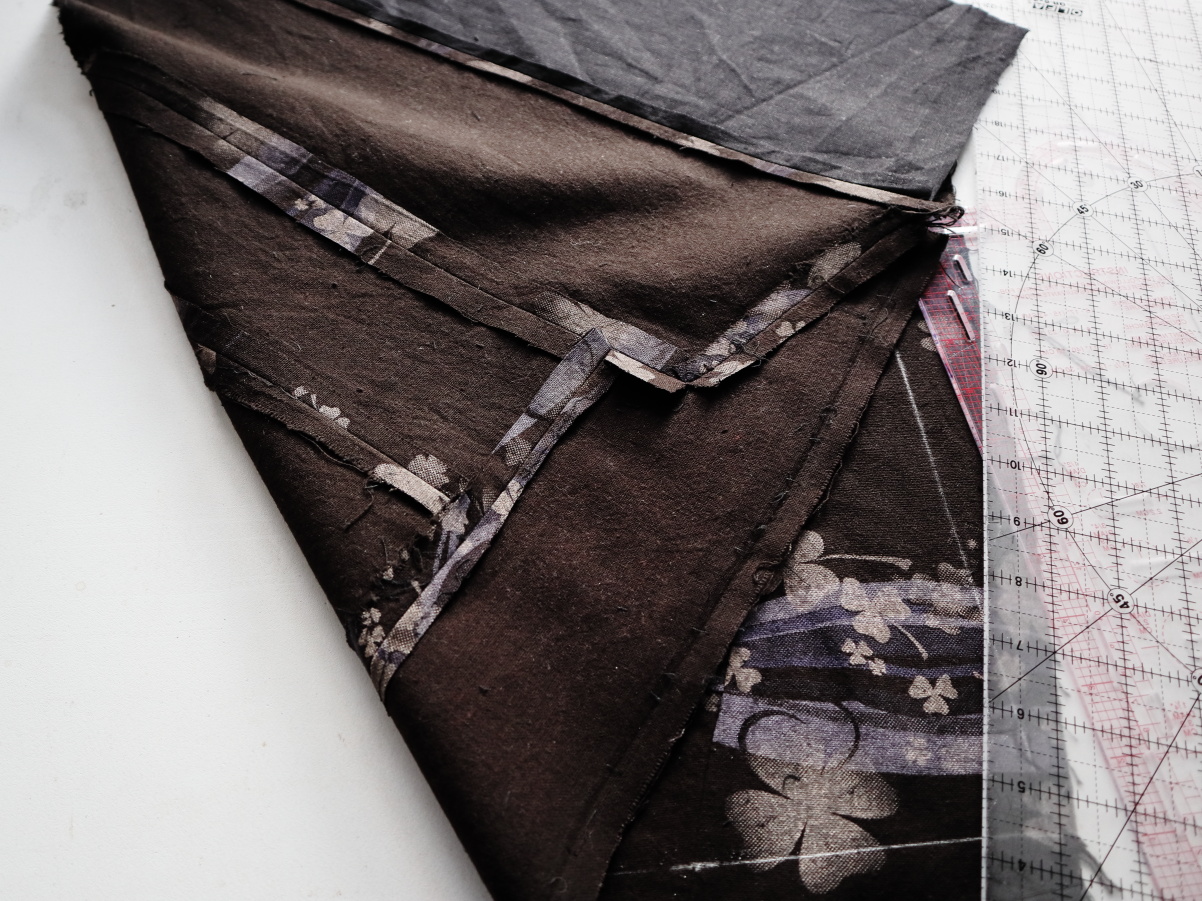
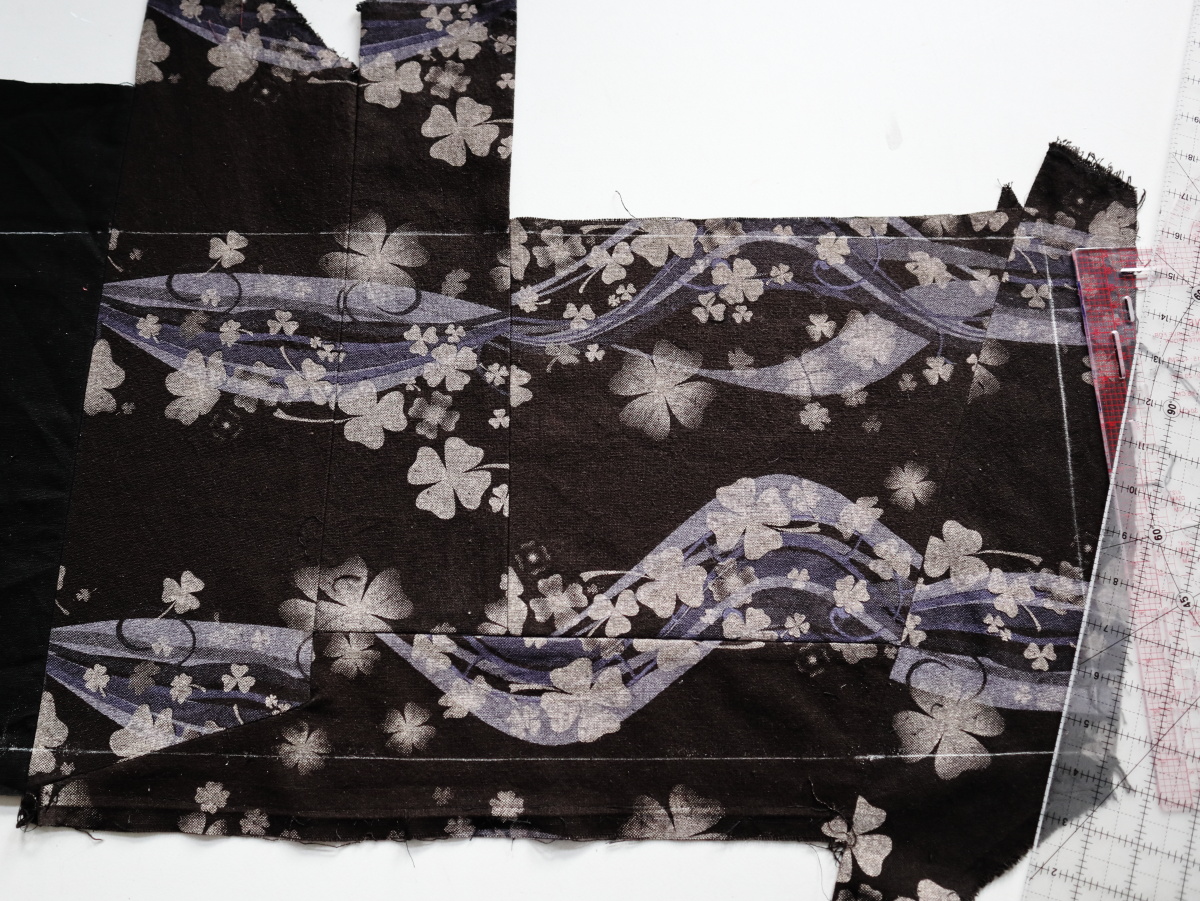
As part of my sewing journey, I am learning how to make the most out of fabric.  For this project, I used a technique called piecing which combines smaller pieces of cloth to create larger. 


I adore this fabric, but it belonged to a pair of trousers that were way too small.  I also needed a new jacket, so I deconstructed the trousers and combined the fabric with cabbage (cloth left over from sewing projects) to see if I could do it.


I read about this technique on Foundations Revealed which admittedly is the reason why I'm needing to be so frugal with my fabric and clothing budget.  The paywall isn't ... well, ... (since then, I had to cancel my membership.  I found I couldn't make the things I wanted to because all the money was going into this and I just wasn't sure I was getting out of it what I put in)

The pieces of fabric are sewn together, attempting to match the flow of the pattern as there isn't enough fabric to match the pattern seamlessly.  

But you know what, it actually worked.  


I lined it with some roughspun silk fabric from my cabbage stash.  I probably should have done more to finish the edges, but it was an experiment and there were a lot of edges.  I can see this being hand-wash only, wear into town, not mucking out the chickens kind of clothing.  


Saturday, March 19, 2022

Early bird gets the worm

The internet is a better place because I made this video.

At least that is what Mrs Clint tells me.


I also promised Mrs Clint a special treat if her video went viral.  She said any video with her in it will go viral so I might as well give her the treat now.  I said, let's wait and see.

The goal is 50K views in the first month to go viral for a channel my size.  I think I'm safe.  

Saturday, March 12, 2022

How do wattles hold up in the garden?

 Five years ago:


The garden is growing, but the soil needs improving.  It just gobbles up water and when we can go months between rainfall... well, here's the rain star for the station nearest the farm.


See how we get just about all our rain from about the 13th of October, until the second week of Jan?  Then it's rainy until the first of May.  And then nothing.  Just dew.  


Click here to learn more about how the garden was made and the challenges (and successes) of growing in this garden (SPOILERS: it was awesome for our climate)

That was fun, but the big question is, how did woven wattle raised bed walls hold up?  Well, the best way to find out is to take it apart and look.  

And oh look, that's todays video:


I can see using this technique for garden beds again (especially that the price of wood has increase ten fold over the last three years).  This is made with materials not only I have to hand, but that would otherwise be tossed on the burn pile.  Wattle has a lot of use outside the keyhole design.  I'm hoping this spring to use it to solve a different problem.

But that's for another day.

Patiently waiting for spring.  Happy gardening all.  

Saturday, March 05, 2022

fun and fluffy

 Long story.  There was a question about spinning fluffy yarn - probably angora.  But making sure it stays fluffy.

So we talked about all the different ways and I mentioned just ply it in.  

What?  

I tried to describe it. 

Failed

Tried to find a tutorial.

failed

So I grabbed my camera and spent the morning making one:


Sorry about the lack of cute animals.  These youtube shorts are great exercise for me, but hard to get everything in under 58 seconds.  

I'm pretty sure I learned this technique from my spinning group.  But I can't for the life of me remember what it's called.

If anyone knows the name of this, please let me know.  


ps, this is even better if you use handspun silk, overtwisted, singles for the ply yarn, then ply as per usual but with the fluffy stuff getting caught between.  

Tuesday, March 01, 2022

Helping or public shaming? Thoughts on language, prescriptive and descriptive dictionaries

 In the beginning, dictionaries were prescriptive.  They told you how to spell in an attempt to create a national unified identity.  Kings and Queens discovered it's much easier to rule over a unified culture and population with a standardized language and shared set of values than a collection of principalities with weird accents and traditions.  This was basically the start of Nationalism, and a little-acknowledged fact is that the Dictionary played a big part in how Nationalism played out.  


Dictionaries fascinate me.  They are magical spell books and I spent hours in my youth reading through the impossibly thin pages - the older the dictionary the better.  Words like spiniferous (having or containing spines) I haven't seen used since.  But modern words like embiggens or doh weren't there yet.  

That's a big change with dictionaries in the 20th Century.  They went from prescriptive to descriptive.

I suspect it was the time that Nationalism really fell out of fashion, the second half of the 20th Century, that people began to look around and notice what they had lost.  I'll pick on England because that's the history I know best.

From the outside, England looks homogenous.  Everyone drinks tea and beer, speaks English, has a shared history and values.  

And yet, that's not exactly true.  

Not so long ago, each village was an isolated and interconnected culture.  With their own traditions, vocabulary, meanings, histories, recipes.  My family's scones recipe doesn't look or taste at all like something you would find at High Tea in London (it tastes so much better).

When I went back to the part of England where my family was from, I was fascinated that everyone in that village had the same "speech impediment" I did.  This is the part of England Chaucer came from and until about 1960, they were still spelling words with that giant F/S letter we never see anymore.  And by the start of the 21st Century, were still speaking as if this letter was part of their world.  

But even this is fading.  The traditions, the language, all this is almost gone.  It's too late that people realized how much stronger these unique histories and cultures and languages of each village made the nation.  

That's where dictionaries have become more important than ever.  They record the language as it is used at that moment in time.  Language constantly changes (just look at how the word decimate has evolved to include all the things desolate used to cover).  So too are dictionaries.  That's why they constantly publish updates.

A dictionary is no longer a dictator of language and culture, it is a documenter of how real humans use language and how that changes over time.

We forget this and ask dictionaries how to write.  Please help us conform to the "proper" or "correct" way.  


The problem with dictionaries is the same problem I have with modern spellcheck programmes - You have to know enough about how to spell the word to be able to look up how to spell the word.  


Learning to read and write was a struggle to me.  As an adult, I've been diagnosed with Dyslexia, but not in the place where I live, so I'm not eligible for help.  But this wasn't something people thought about when I was a kid.

School was daily tears with the teacher publically explaining to me how lazy I am, that I'm purposefully disrupting the class by not being able to read out loud from the textbook or misspelling simple words when told to write on the chalkboard.  Write them out 100 times in front of the class while everyone else got a reward for passing that day's quiz.  And write them out again and again at home.  Write them out until you learn them.  Stay behind for extra homework for your failure. 

Public shaming and writing out words over and over again didn't help me spell any better.  I think it made it worse.

I know it made it worse.  

I'm stupid.  I'm lazy.  I don't try hard enough.  I can't grasp simple spelling.  I can't read fast enough.  I'm a terrible student.  I need to try harder.  

Each of these creates an emotional block that is between me and learning how to spell.  


The thing is, I actually can learn how to spell.  But I'm slow.  Maybe one or two words per month if I put my mind to it and clear away the emotional fog that gets in the way.  

That's why I started blogging just as soon as I became an adult.  An active attempt to improve myself. 

But I'm still heavily dependent on technology to be legible.  


Technology is flawed.  It's not great at contextual spelling.  Most days it shuts down as "no known language detected." 

Apparently, dyslexia is not a dialect spellcheckers are good at.  Aknolaged becomes annotated when run through a high end (and expensive) spellcheck and our brains aren't always able to catch the mistakes in the 'correction'.  

It takes tremendous courage to write publically.  Every word is an opportunity to be exposed to ridicule for not being good enough.  For failing to meet the standard.


When I was in high school, there was a man with a hook for a hand.  It was sort of a hook, sort of a clamp.  It was something we were told not to talk about.  

The thing I remember most was that, unlike with me, not one of the teachers loudly corrected him on how to hold a pen.  It wouldn't do any good anyway, he didn't have fingers to adjust to the correct grip.  He just clamped it in his hook and wrote.  

His lack of fingers exempted him from the public criticism of not being able to grip the pen according to how the textbooks said we should.  

That's the memory that stood out strongest.  It was enough that he could write at all.  He was rewarded for achieving what he shouldn't be able to do.  


Now I understand a bit more about dyslexia and how much I need that mechanical aid (spellchecker who can handle my typings without shutting down in a nervous wreck).

I also understand that there are people in the world who feel physical pain when they see a word misspelt and want to help by correcting this tremendous wrong in the world.  

They do so publically and loudly.  

On forums, this might be someone replying to a comment with a lecture on how you got the wrong homonym.  Nothing to do with the topic of the conversation, but then others pile on and also "help" by explaining the mistakes made.  (it's also a common troll trick to discredit the other writer if the conversation wasn't going their way)

I wonder if they would tell the man with a hook for a hand how to hold a pen correctly?  Somehow, I don't think they would.  


What these public correctors don't understand is that we don't deliberately try to spell things wrong. 

Writing in public is an act of courage.  

What to them seems like a minor thing to help someone spell better has the opposite effect.  It's a loud and public shaming.  

It decreases the likelihood of being able to spell that word correctly in the future.  

What's more, these little acts of 'helping' shuts people out of the world of writing.


When I was in university, it was estimated that about 20% of the English Speaking population has a language disability strong enough to impair their daily existence.  Add to that, people who learn English as a second language and people who acquire language processing issues as they live their lives, and so on and etc... that's a lot of people who must build up the courage to interact with the world of writing.  And who mostly don't.  They avoid it.  They have little to no voice in our society.  

We talk about the 21st century being years of enlightenment and equality and equity - and yet because this massive segment of the population has no strong voice on the internet - a world still dominated by the written word.  Their/our story isn't heard.  


Publically helping people spell better is simply shutting a gate on their face.  It's prescriptive dictionaries all over again - building a unified nationalism and culture where people with invisible disabilities are unwelcome.  Where I am unwelcome.  


This is my ask to you:  If you see a misspelling on the internet, first ask yourself "is the writing understandable even with the wrong word in there?" Most of the time it doesn't matter and it isn't hurting anyone to leave it alone.

If the error makes the meaning unclear, then quietly and privately send the person a note saying "hey, I noticed you were having trouble with this word - can you clarify you meant such and such?  And thanks for sharing what you had to say.  I value your words enough to take the time to want to understand better." (adjust it to fit your style)

Chances are those kind words will remove several emotional bricks from their wall of awful and help them spell that word better in the future.  


And there you have it.  I've changed nothing in the world with my words.  One defective voice whispering in a hurricane of righteousness.  If anyone manages to read this far, it certainly won't be the people who need it most.  In the end, I've just written this for myself, and that's okay too.  

Saturday, February 26, 2022

My Treasure - Can I repair this waterlogged Singer Featherweight sewing machine?

The amount of water coming out of the box as it was handed to me, reminded me of scenes from a movie where they pull a treasure chest up from the bottom of the ocean.

I admit, I was worried.


As the history of this blog shows, I'm not a stranger to repairing these old machines - be it sewing, typewriter, or other long lost treasure.  'Though, I've never tackled something this decayed before.

Is it repairable?  And am I the person to do it?  

I hope you join me on this journey.    


Saturday, February 19, 2022

False spring


Having a retirement flock of chickens living in part of the garden makes it easy to spend more time outside.  They are each lovely with unique personalities.  

Petrichor the rooster, has an arthritic wing, but still believes he's the strongest boy on the farm.  

Lady loves to be sung to every night but won't suffer any duck but Mrs Clint - and won't go anywhere with Mrs. C.  

Nana is the mother of so many chickens hatched on the farm.  One of the oldest animals, she is slow, wise, and loves her comforts.

And then there is The Widow Clint.  The only duck I met who was 100% monogamous and who's friendship with Lady kept her going through the worst of the grief.  That and the worms we dig for her each morning.  She can't wait for the worms.

We've had a break from winter.  Double Digit Celsius days (over 60F) in the coldest month foretells a stormy spring. 

But that's a problem for future us.  

Instead, I take advantage of the sunshine and play with some yarn.

freshly dyed yarn drying in the winter sunshine

And digging the garden for when it is time to plant.  Because gardeners are nothing if not optimists.  

Saturday, February 12, 2022

Standing out in the cold - I try root retting stinging nettles

 Our stinging nettles take forever to die off in the winter.  It isn't until the hard freeze we get for a week to ten days after Christmas that they really start to die back, and even then there are hangers on.  

But come Feb, all but the most shelter nettle plants are standing corpses (with the little baby nettles already peaking up in the leaf litter).  A few days break from the rain and we can finally explore the root retting method for harvesting fibre.  

On my bookshelf, you will find,Yarn from Wild Nettles, by Birte Ford.  It's a great book with lots of ideas for, you guessed it - transforming stinging nettles into yarn.  It is from here I got the idea.

Finally, I caught the nettles at the perfect moment in our weather cycle - so it's time to see if it works.

Here's what happened:


I think I know why it didn't work. 

Wednesday, February 09, 2022

Spinning wheel options for people who can only use their upper body

 I saw a question on reddit a while back.  For reasons, they were looking for spinning wheel options that use only the upper body.  I love a challenge!  

 I'm never going to learn that reddit is the place for one-sentence answers.  But I also know that whatever is written there quickly fades away.  So, with that in mind, the following was my (rather long-winded) reply. (spelling mistakes and all)


Exciting! I love this part of the process... getting ready for the next step and finding the wheel to best fit your needs.

Before we go too much further, I do want to mention that per minute spent a wheel is more efficient (and a spindle wheel like a charkha even more so), but like two pointy sticks vs the knitting machine, per day spinning, a spindle can easily out do a wheel. The portability and freedom to use every spare moment... but you're ready for a wheel, so let's get to that.

Using only upper body. I'm imagining a long draw (like a spindle wheel), using a distaff, or an e-spinner.

Charkha - especially the book (folding up version) is very good at cotton and other downy fibres with a staple length of under 2 inches and for spinning fine thread. I wouldn't say it is ONLY for cotton (saying that a wheel is ONLY for ONE SPECIFIC kind of fibre is my biggest bugbear! That and the modern trend of calling wheels "wool wheels" or "flax wheels"... It's simply not true!) is a mistake someone who didn't know spinning made a few decades ago and it's been parroted as truth ever since. (I'll cut the rant short there).

Spindle Wheels (a charkha is just one kind) traditionally (but not always) have a drivewheel that is hand-powered, and a spindle that we spin the yarn off the tip in a long (one-handed) draw. This is one of the oldest styles of spinning wheels and is extremely efficient! Miles per hour, I can spin more on this kind of wheel than any other.

A great wheel or Walking Wheel would be the European/North American equivalent. We also had table top versions but they were less popular. In much of the world, they have smaller table top spindle wheels (in India it's called a charkha, other places have different names).

These are great for fibres under 4" and were often used for wool and cotton in North America. Most of them have a stronger spindle and motherofall than a book charkha, so they can handle coarser fibres.

In Europe, when these first arrived, there was a strong rebellion against them because the yarn wasn't as consistent as people would like (learning curve took a while to get the quality up) so they quickly got the reputation that 'wheel spun yarn isn't strong enough for warp in weaving' which was parroted along the centuries to peak in the 1970s as "all handspun yarn is impossible to use in weaving"... sigh. (another long rant later... where was I?)

I know quite a few people who spin linen/flax on a spindle wheel as this technology is infinitely adjustable for the spinner's needs.

You can also adjust your method so that you can spin worsted-style using a distaff and different drafting techniques on a spindle wheel.

Spindle wheels are far more versatile than many people realize. I know quite a few novelty yarn spinners who have converted their flyer wheel to spindle because they can get the results they want.

A GOOD e-spinner will give you the largest variety of yarn possibilities. It lets you use both hands to spin the yarn. Good not only means well made (I'm partial to the Ashford ones, but there are many well-made ones out there) but a good fit for the spinner. If possible (and this goes for any spinning wheel) see if you can try one before you buy. Some yarn shops have them that you can use.

Adapting a treadle machine to hand powered: I haven't... but it sounds awesome. I would go with a Saxony style (big wheel to one side of the flyer). Cut the legs to make it tabletop compatible... or adjust them somehow for the right height for your body. Take the treadle and footman off as well. You could turn the spokes with your hand like a great wheel, but I almost feel I would reverse the wheel somehow so that the axel is facing towards me and I could put a handle on it.

Drafting one-handed isn't awesome on a flyer wheel. Simple to convert it to a spindle wheel... but there are ways to spin without doing that. Distaff mentioned earlier will probably be the best method. Long draw for woolen style yarn also works.

And I've written a huge essay. Sorry.

Let me know if you have any specific questions. I'm excited about your adventure and would love to learn what path you choose.

Saturday, February 05, 2022

It doesn't madder what colour I get

 Confession time: Dyeing scares me.

(dyeing - as in making things colourful)

There is so much science about it - and as much as I love geeking out and learning the details, I also get lost in them.  

What if I do it wrong?  What if it's ugly?  What if... 

A few months ago, I was putting my garden to bed for the winter and I was thinking about this list of what if's, probably because I was digging up some madder roots for a new garden because I love the colours madder makes and you can never have too much.  

I put aside about a third of the madder root for drying and dyeing at some later date.  Because one day I'll know enough to be able to use it.  I've never seen instructions for dyeing with fresh root before.  Maybe it's not possible.  Someone would have told me if it was.

Then I started to get angry at myself. Why don't I just do it?  It's only yarn.  I've got nearly 5 kilometres of handspun yarn ready for just this sort of harvest.  It's not like I need a specific colour, all I want are pretty reds.  What keeps stopping me from dyeing?  

The answer, I'm sad to say, is me.

So I designed an experiment based on what I know about madder.  Scared that I might destroy all that handspun yarn, but excited too that I could finally do this thing.    


It's so pretty!  


PS, don't miss out on the easter eggs at the end of the video.  

Saturday, January 29, 2022

Stuff, repair, repurpose, Kintsugi (金継ぎ)

About a year ago, some stuff happened.

It looked something like this, only not. 


An injury. 

Nearly 12 months later, I find out what is going to heal on its own, would have by now.  

I'm not good at accepting that.  

But there are some therapies that are show promise.  Believe it or not, the health system pays for me to go to mindfulness classes.  As if this is the glue that will help pull the pieces back together.


I'm beginning to realize, even if I could find all the little missing shards, it won't be what it was before.

Not the same.


 But it's a really cute mug... I mean, it's the only life I have.


So what do I do?


I look at what remains.  Find something to fill in the gaps.  Hope.


Most of all, I repurpose.  


They say it will help, but mindfulness, especially the guided stuff, bores the pants off me.  

And yet, it meshes so well with my learning of photography and videography.  The camera sees what's actually there.  To capture the moment, we too need to see that moment.  To be attentive, not with judgement, but with a curiosity of everything the camera sees and hears - and what it doesn't.  

So maybe my instinct to make up for what I have lost from the written world by learning new visual skills, is a way of healing?

But also there is grief.  But that's part of healing too.  


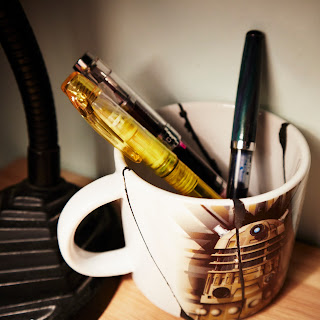
This mug was a Christmas gift.  Part of a set and all the others arrived with loving perfection except this poor shattered Dalek.  I looked into different ways to repair him, and although I would love to one day try Kintsugi (金継ぎ) which is a repair with lacquer and gold and I'm told does such a good job the mug is 100% useable again.  I couldn't find a traditional kit (most modern ones use chemicals that aren't food safe or heat resistant enough for tea) in my price range.  Maybe one day.

For now, I have a protector for my fountain pens.  

Use at your peril. 

Saturday, January 22, 2022

Some thoughts on vintage sewing machine repair - coming back to it after 10 years

It's been 10 years since I've last worked on a vintage or antique sewing machine.  I actually sold most of my parts (keeping only a few prized machines for myself and some parts machines if they break) and moved on to repairing other things.  I love working with sewing machines, but the truth is, there was very little interest in these beauties and almost no good resources online on how to fix them.

The few sewing machine posts I have on this blog, are some of my best-performing pages.  The interest goes up every year and thanks to the ads on my site, I'm earning between 1 and 5 cents per week from them (not much, but every little bit counts).  It's amazing how much more interest there is now than 10+ years ago when most of them were written.  


A thing happened the other day and I brought home a sewing machine that would, to any sane brain, be considered well and truly beyond repair.  

Guess what?  oh, you guessed.

That's right, I'm going to see if I can repair it.  


I know the worst thing to try to fix is a bad repair, so I'm taking this slow and doing my due diligence.  I'm spending a lot of time with my friends duckduckgo and google to see what new information is out there and WOW!  The interweb is flooded with advice on how to repair and restore vintage sewing machines.  

Most of that advice is horrible!  I know this because I've spent many hours repairing the kind of damage following that advice causes.  

About 5 to 10% of what's on the internet in this area is good advice.  About 50% of what is left is okay, but not going to give the long term life that one wants or cause unnecessary work (most common seems to be removing the shellac or "clear coat" because they mistake it for caked-on oil and grime).  The rest of the advice, I'm not sure if it's well-meaning or written by people who want the value of their machine to go up by destroying the existing machines.... evil laughter. 

So the ratio is about the same but the quantity to shift through is so much more.  

Although I am loving how much of this is on youtube now.  But restoration videos are one of my favourites.  I wish I had a sound safe studio space where I could make some ASMR repair videos for you all, but alas, something to dream about in the future - living in the country is NOISY (tractors, cars, planes, roosters, geese, sheep... )

Anyway, I really like this guy, as he doesn't recommend things I know will damage the machine.  


Some of you have probably already guessed what my new treasure is from the photos.  For the rest of you, all will be revealed as I'm going to document this project on my youtube channel.  

But evaluating the machine, I also notice that I'll need to spend quite a bit more money on this restoration than usual.  It needs new paint, and paint stripper and... I don't even want to think about it yet.  Some of this I can improvise.  Some I cannot.  On the whole, I would be very very lucky if the cost of materials to restore this were less than the final value of the machine.  Also, I might keep it as a forever machine.  I haven't decided yet.  

It's important to me that every hobby be self-funding, so part of this project is looking for creative funding ideas.  Youtube now gives me money for ads (at just under a dollar a day for all my videos, so you can guess how small that is per video).  But I also don't turn on all the advertising features like commercials that show up in the middle of the video.  I can see clicking all the boxes for these sewing machine videos to see if I can the machine to fund its own repair.  


In the photos, some of this is rust, most of it is old grease and oil.  It will be interesting to find out how much of each.


Happy sewing everyone!  


Wednesday, January 19, 2022

Experienced shepherdess seeks bummer - only ewe lambs need apply.


I am looking for a young ewe lamb or two to hand raise and join my flock.

I have a small fibre flock and work from home.  I love spending time with my sheep.  But we aren't lambing this year and I miss having the little bleaters underfoot. 

I would like to buy one or two young ewe-lambs, not yet weaned.  Preferably a bummer that the mum is unable/unwilling to care for. 

I have no specific breed in mind, but I would like it to be a squishy wool good for sweaters and socks (most of my current flock are Cotswolds).  A Suffolk or Suffolk X would be lovely for sentimental reasons.  Will consider "meat" breeds as they often have lovely fibre - what keeps a meat sheep happy and healthy also makes good wool. 

This will be a forever home.


Rams, wethers, and hair sheep need not apply.